Basilica Papale San Paolo fuori le Mura
2021-03-08Once the biggest basilica in the world, the Basilica of Saint Paul Outside the Walls (Basilica di San Paolo Fuori le Mura) is one of four ecclesiastical basilicas in Rome and among the city's most significant Christian sites! Presumed to be set over the burial chamber of St. Paul, the church has a striking inside beautified with 80 columns and extensive mosaics.
National Etruscan Museum of Villa
2021-03-05National Museum of Villa Giulia which is also known as Museo Nazionale di Villa Giulia, museum in Rome mainly provide to antiquities of the pre-Roman time slot from antiquated Latium, Umbria and southern Etruria. It is housed in the Villa Giulia,
Via Francigena
2021-03-03Headed straight toward Rome discover 2000 years of culture and history on the Via Francigena. Get ready for an astonishing excursion - from the first to the last step.
Campidoglio square
2021-03-01Piazza del Campidoglio was build by Michelangelo in 1536, The first advance civic square in Rome. Roosted at the highest point of the Capitoline Hill ignoring the Roman Forum,
Pyramid of Caius Cestius
2021-02-26The Pyramid of Cestius can be seen from the railroad station in the south. You can see that the landmark was changed over into a rampart in the Wall of Aurelian, which was worked after 270. In the seventeenth century
National Roman Museum, Baths of Diocletian
2021-02-24The Baths of Diocletian—the biggest baths for public in Imperial Rome— which is covered 32 acres. In spite of the fact that a significant part of the first perplexing was destroyed or incorporated into later churches and palaces,
Aventine Hill
2021-02-22One of Rome’s seven incredible hills, Aventine Hill (Aventino) is situated farthest to the south along the Tiber River and is home to the fifth-century Basilica of Santa Sabina, Rose Garden, Orange Garden,
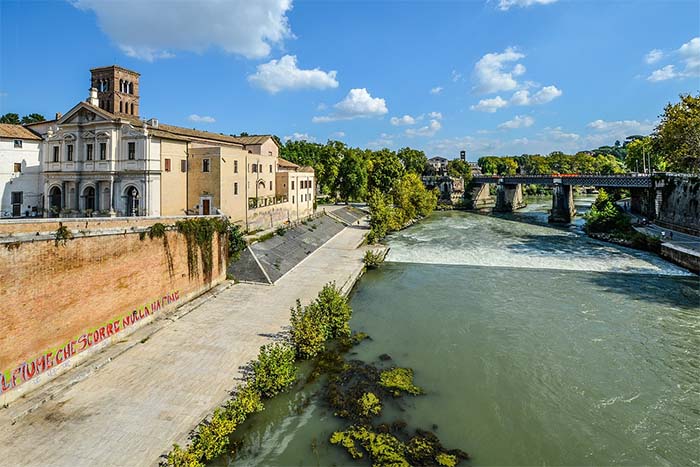
Tiber Island
2021-02-19The Tiber River has gone through Italy's capital city since old Roman times, and Tiber Island has a history that’s just as long. When the site of the old sanctuary of Aesculapius,
Pincio Promenade
2021-02-17Pincio Promenade is an excellent walk to take from Piazza del Popolo to arrive one of Villa Borghese entrance. It's one of the better points of perspective in general Rome landscape.
Quirinal Palace
2021-02-15Quirinale Palace (Palazzo del Quirinale), the official residence of the president of the Italian Republic, lies on Quirinal Hill, the biggest of Rome’s historic seven hills. Formerly a royal residence, the palace has dozens of sumptuous,