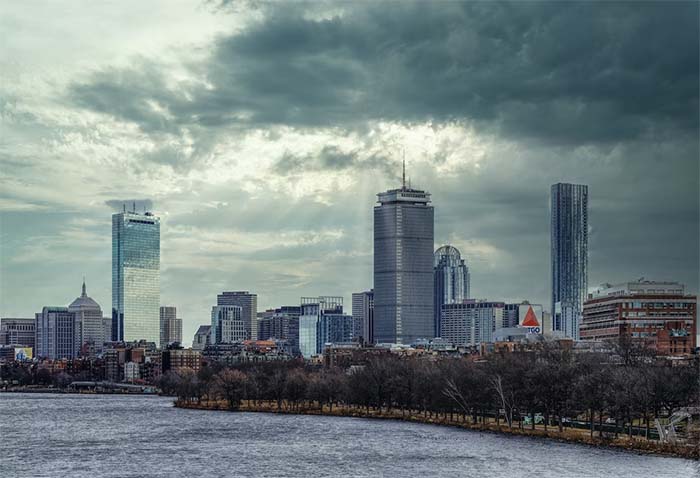
Prudential Tower
2021-03-11Developed in the 1960s in a particularly modern style, the Prudential Tower truly stands out in a city well known for its stunning and historical architecture. Although not as everybody would prefer, the contemporary Tower offers incredible perspectives on Boston
Rose Kennedy Greenway
2021-03-09The 17 acre green ribbon of the Rose Fitzgerald Kennedy Greenway is a real treasure to the city of Boston. Born of the Big Dig that sank significant interstates underneath the city and named for the authority of the Kennedy political administration,
The Institute of Contemporary Art
2021-03-06Boston has become a main point for contemporary workmanship of art in the 21st century, with the Institute of Contemporary Art driving the way. The huge light-filled inside takes into account sight and sound introductions, instructive projects and studio space,
Arnold Arboretum of Harvard University
2021-03-04Arnold Arboretum of Harvard University, significant botanical research centre popular for its collection of ornamental shrubs and trees from Asia. Established in 1872, the arboretum comprises of 281 sections of land (114 hectares) at Jamaica Plain in Boston,
Copley Square
2021-03-02Named after the American portraitist John Singleton Copley, Copley Square is a historic central point of this bustling commercial area. A bronze sculpture of Copley can be found on the northern side of the square. Close by Boylston Street offers shopping
Franklin Park Zoo
2021-02-25Inaugurated in 1912 the Franklin Park Zoo is one of Boston’s most novel Zoos with bunch species of birds, animals and reptiles. The well-maintained zoo is presently taken care of by the New England Zoo.
Granary Burying Ground
2021-02-23Located close to Park Street Church, Granary Burying Ground on Tremont Street is one of the ancient cm in Boston and was implicit in order to meet the city’s developing population after King’s Chapel Burying Ground running out of space.
John F. Kennedy Presidential Library and Museum
2021-02-20The John F. Kennedy Presidential Library and Museum developed for the country’s 35th President is located at Columbia Point in Boston. It was committed to late John F. Kennedy in 1979
Boston Tea Party Ships & Museum
2021-02-18The Boston Tea Party Ships and Museum offers a perfect opportunity for everybody who want to learn in depth about all that transpired in 1773 after the Tea Acts imposed by the British Government.
Newbury Street
2021-02-16The Newbury Street in Boston is one of the earliest built roads in the city. Previously a part of Boston Harbor, it is over a mile long and stretches across Arlington Street in the east to Brookline Avenue in the west.